Branding and Design as Levers for ROI and Brand Value
The New Dynamics of Efficiency and Revenue Growth


-
Assunto
Branding
Design
Brand Value
ROI - Autor: Sillas Maciel
-
Segmento:
Business
Strategy
Branding
Design
In the current corporate landscape, where efficiency dictates the rules of the game, ROI (Return on Investment) has taken on a role much greater than a simple month-end metric. Today, in boardrooms, the main question among leaders is not about costs, but rather: "Which asset brings the most consistent return to the business?"
In this context, Branding and Design have undergone a profound reframing. They are no longer seen as secondary cost centers, solidifying themselves instead as true competencies of economic efficiency.
The current challenge for companies is no longer questioning the importance of the brand, but understanding exactly how to transform these competencies into measurable levers for ROI, audience building, and market value.
The New Dynamics of Efficiency and Revenue Growth
The most powerful impact of a consistent Branding project is the solid construction of Brand Equity. A clear strategic positioning wards off commoditization and makes the company magnetically attractive to both its end audience and its investors and shareholders.
This statement has ceased to be an assumption and has become mathematics.
According to data from McKinsey & Company: "Companies that integrate design strategically into their businesses outperform industry peers by 2 to 1 in revenue growth and deliver 56% higher returns to shareholders."
Beyond macro growth, discipline in brand application generates direct results in cash flow. Consistency ensures that the message is not lost in the market noise.
According to data from Lucidpress: "Strategic brand consistency across all touchpoints can increase revenue by up to 23%."
Branding and Design for an Owned Audience
Companies without a strong brand are held hostage to "renting" customer attention through algorithms and paid media, facing ever-increasing costs. Strategic Branding inverts this logic.
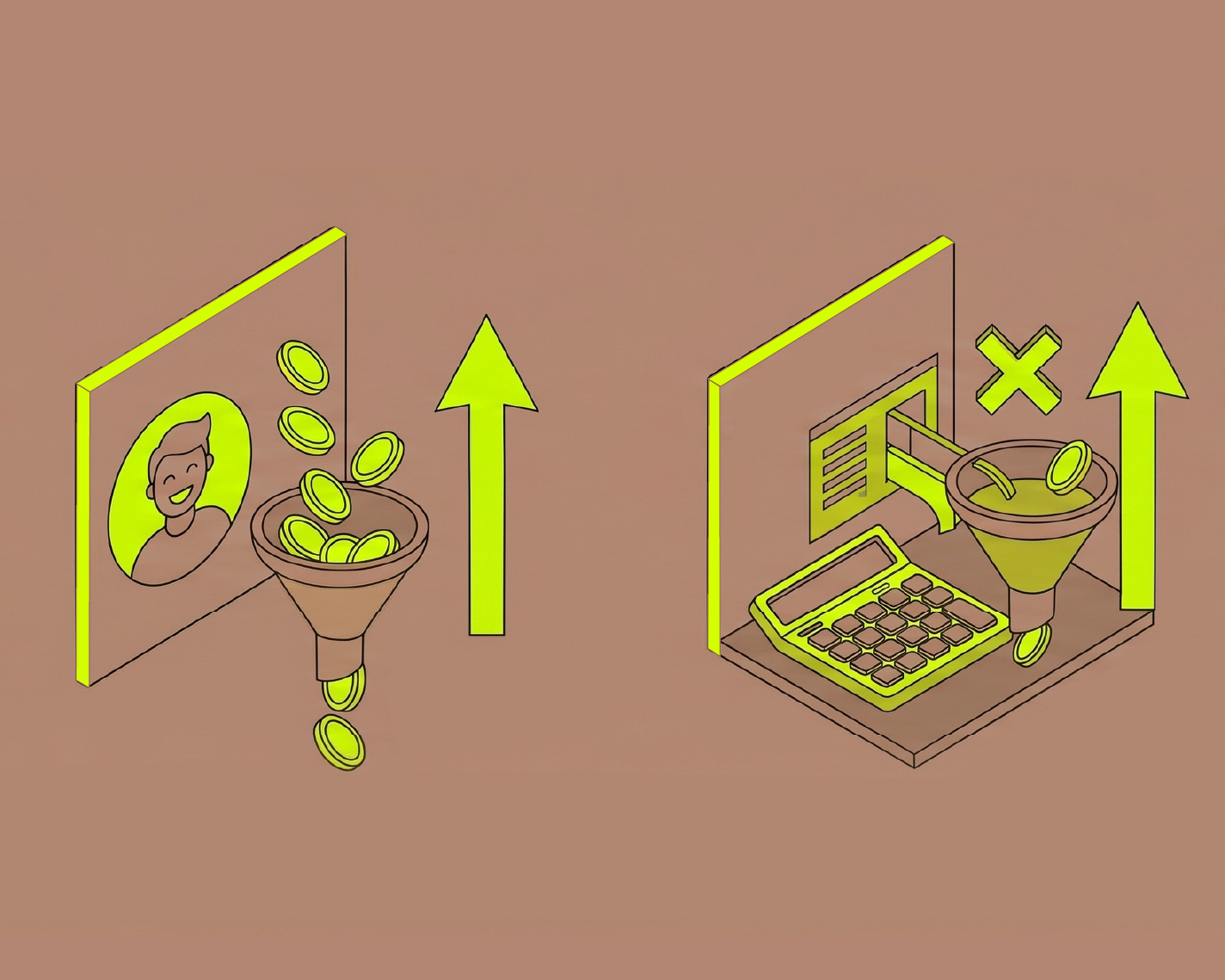
By intentionally using design and storytelling, a company builds its Owned Audience. The practical result in the sales funnel is immediate: strong brands command higher click-through rates (CTR) and higher conversion rates. This decreases the reliance on ads and reduces Customer Acquisition Cost (CAC).
The Consistency of the Brand Experience
Brand value is built intentionally at every touchpoint. From the tone of voice in the digital environment to the packaging design; from the website interface to the agile way a customer service issue is resolved.
According to data from Salesforce: "80% of consumers say the overall experience a company provides is just as important as the technical quality of its products or services."
A seamless and cohesive brand experience builds the three pillars of loyalty: trust, emotional memory, and belonging. It is this consistency across all interactions that elevates the brand's reputation and transforms it into a benchmark in the audience's mind.
Design as the Materialization of Value
A company's strategy is invisible until design brings it into the real world. Design is the visual materialization of the business's strategic positioning.
A strong and sophisticated visual presence signals competence, rigor, and corporate maturity even before the audience has their first contact with a service, product, or business.
According to data from Stanford: "75% of consumers admit they judge a company's credibility based on the design of its identity and digital platforms."
In practice, high-level design reduces entry friction. Brands with a refined visual perception are viewed by the market as lower-risk assets. This aids in complex decision-making, attracts the best talent to the team, and elevates the company's value in the eyes of the public and shareholders.
The ROI of your brand is not an assumption; it is the consequence of results-oriented design and positioning. If your company seeks economic efficiency and market perception, investing in Branding and Design is not just the next step, it is the secure path.